What String and Tension Should I Use? | True Tension
There is no single perfect tennis string tension. The right tension depends on your racquet, string, playing style and what you want to feel from the ball. Here’s what to consider when choosing your tension.
Sep 21, 2026
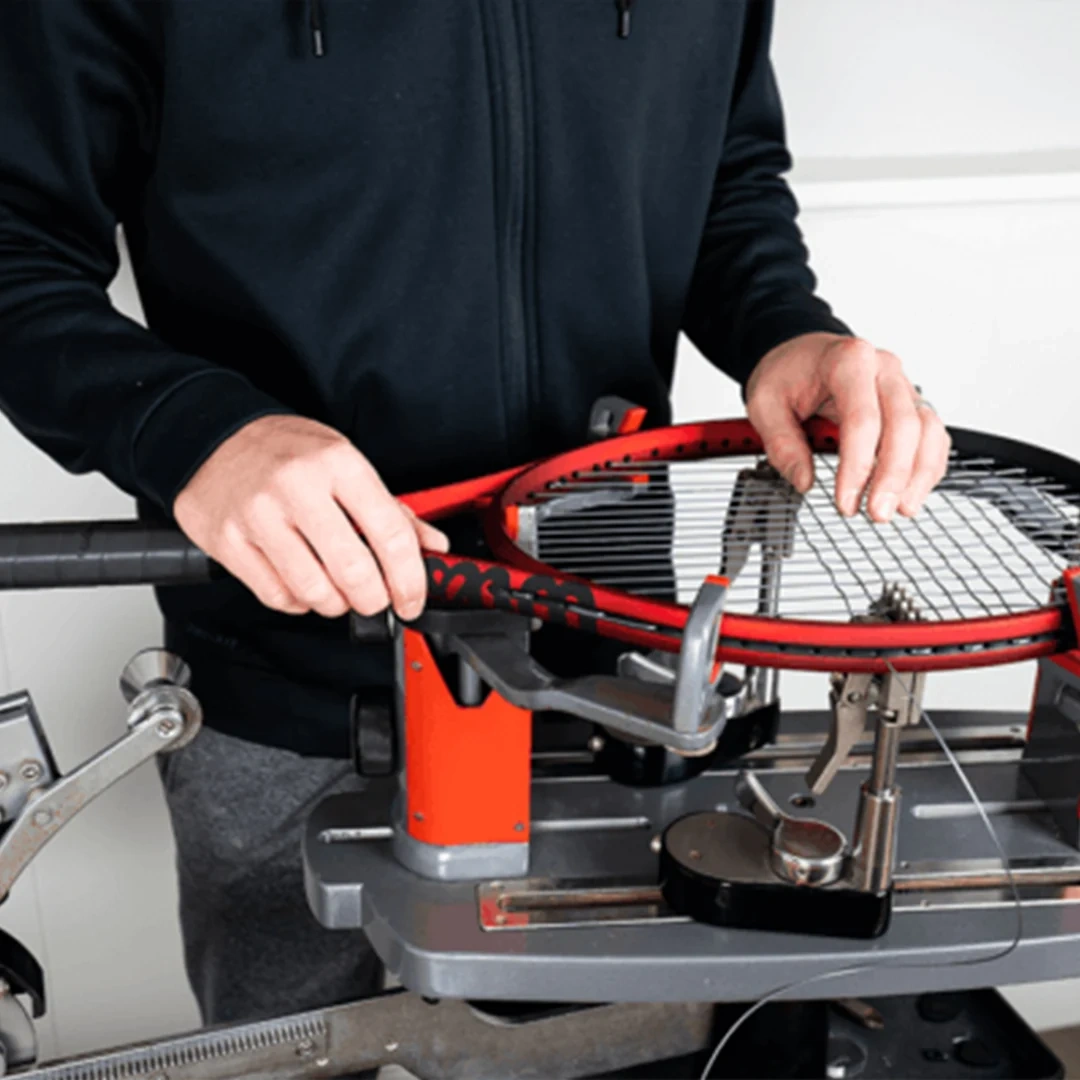
It is one of the most common questions I get asked when restringing racquets: what tension should I use?
The answer is that there isn't one tension that is right for everyone.
Through many years of playing, coaching and restringing racquets, I have found that tension works best when it is considered as part of the complete setup. Your racquet, string type, playing style, age, strength and personal preference can all influence what tension will suit you.
Two players using exactly the same racquet may be better suited to completely different tensions.
Start with the racquet's recommended range
Most tennis racquets provide a recommended tension range, usually shown somewhere on the frame or in the manufacturer's specifications.
That range is a useful starting point, but it doesn't mean every player should simply choose the middle number.
From there, you can adjust the tension depending on the type of string being used and what the player wants from the racquet.
What happens if I lower my string tension?
As a general rule, lowering your string tension can create a softer and more forgiving string bed.
Many players find a lower tension provides easier depth, more comfort and a greater feeling of the ball sinking into the strings.
This can be particularly useful for players who don't generate huge racquet-head speed or who want their racquet to provide a little more assistance.
But lower isn't automatically better.
Go too low for a particular player and the racquet may begin to feel less predictable or provide more power than they want.
What happens if I increase my string tension?
Increasing the tension generally produces a firmer string bed.
Some players prefer this because they feel it gives them a more direct response and greater confidence when controlling the ball.
However, increasing tension doesn't automatically solve control problems.
If you go too high, the racquet can begin to feel stiff, uncomfortable or underpowered. The player may then compensate by swinging harder, which can create another set of problems.
The aim isn't to string as tightly as possible. It is to find a tension that works with the player's game.
String type makes a big difference
One of the most important things to understand is that the tension number doesn't tell the whole story.
A racquet strung at 50 pounds with a multifilament string can feel very different from the same racquet strung at 50 pounds with a polyester string.
Polyester strings generally produce a firmer string bed and are commonly strung at lower tensions than softer strings.
Multifilament and synthetic strings tend to offer more elasticity and comfort, so the appropriate tension may be different.
This is why simply asking another player what tension they use isn't always particularly helpful. Their string, racquet and game may be completely different from yours.
What tension should junior players use?
With junior players, I generally think the priority should be comfort, feel and allowing the racquet to help them play, rather than chasing an unnecessarily firm setup.
Age alone isn't enough to determine the right tension.
The player's size, strength, technique, racquet, string and level of tennis all matter.
A developing junior who is still building racquet-head speed has very different requirements from a physically developed teenager competing at a high level.
The same applies to string choice. Not every junior needs polyester simply because stronger or professional players use it.
Don't make huge changes
If your current setup is reasonably close but doesn't feel quite right, I generally prefer making relatively small changes rather than dramatically changing the tension.
A change of a few pounds can be enough for a player to notice a difference.
If the racquet feels too firm or you are struggling to generate comfortable depth, you might experiment with a slightly lower tension.
If the string bed feels too lively or unpredictable, a slightly higher tension may be worth trying.
Changing one variable at a time also makes it much easier to work out what actually helped.
Keep track of what you're using
One of the simplest things players can do is keep a record of their setup.
Know your:
Racquet
String
String gauge
Tension
Date of restring
Then pay attention to how the racquet feels.
If you really like a setup, you have something you can reproduce. If something isn't quite right, you have a clear starting point for making a small adjustment next time.
Over several restrings, you can gradually narrow in on the combination that works best for you.
So, what tension should you use?
There isn't a magic number.
The best starting point is a sensible tension within your racquet's recommended range that takes into account the string you're using, your playing style and what you want from the racquet.
From there, small adjustments can help refine the feel.
The goal isn't to find the highest or lowest tension.
It's to find your tension.
Need help choosing your tension?
At True Tension, we provide professional tennis racquet restringing in Adelaide and can help you choose an appropriate string, gauge and tension for your game.
If you already know exactly what you want, we'll reproduce your preferred setup. If you don't, that's completely fine too. Tell us about your racquet, your tennis and what you're looking for, and we'll help work through the options.
The right string. The right tension. Professionally restrung.
Book a restring with True Tension.
Need your racquet restrung? True Tension provides professional tennis racquet restringing in Adelaide, with personalised advice on string type, gauge and tension.
Text Steve on 0448 299 370 to arrange your restring or get advice on the right string and tension for your racquet.