How Do You Know When Tennis Strings Are Dead? | True Tension
Tennis strings can lose their performance long before they break. If your racquet feels dull, your control has changed or your strings are showing signs of wear, they may be past their best. Here are the key signs to look for.
Sep 21, 2026
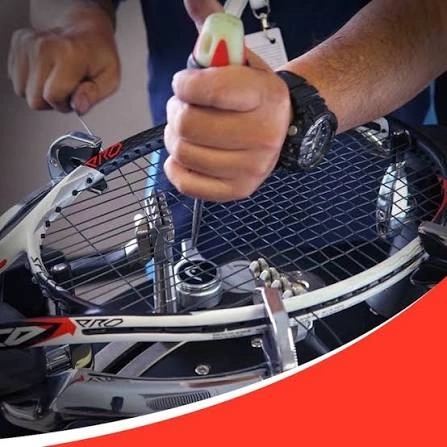
Tennis strings don't need to break before they stop performing at their best.
In fact, one of the most common things I've seen through years of playing, coaching and restringing racquets is players continuing to use strings long after the string bed has changed significantly.
The tricky part is that strings usually don't suddenly become "dead" overnight. The change happens gradually, which means you often adjust to it without realising.
So how do you know when your tennis strings are past their best?
There isn't one test that works for every player or every string, but there are several signs worth looking for.
What does it mean when tennis strings are "dead"?
When players talk about dead strings, they're generally describing strings that no longer feel or perform the way they did when they were relatively fresh.
Tennis strings begin losing tension after they're installed. Over time, their playing characteristics can also change.
The result can be a string bed that feels less responsive, less predictable or simply different.
Because this happens progressively, it can be difficult to recognise until you compare the racquet with one that has been freshly restrung.
Your racquet feels different
For me, this is one of the most important signs.
You know your racquet better than you probably realise.
If you've been playing regularly with the same setup, you develop an expectation of how the ball will feel when it comes off the strings.
When that starts to change, pay attention.
The racquet might feel dull, less responsive or simply not as good as you remember it feeling after a fresh restring.
You may not be able to explain exactly what's wrong. Sometimes the best description is simply:
"It just doesn't feel right."
That's worth listening to.
You're struggling with control
A change in control can sometimes be a sign that your strings have changed.
You might find balls travelling longer than expected or feel as though you're having difficulty predicting how the ball will come off the string bed.
Of course, not every ball that goes long is caused by your strings.
Technique, timing, conditions and the player at the other end of the court all matter.
But if your racquet consistently feels less predictable than it previously did, the strings are one thing worth checking.
You're working harder to generate depth
The opposite can also happen.
Some players find that an older string bed feels less responsive and they begin swinging harder to generate the depth they're used to getting.
Again, this doesn't automatically mean your strings are responsible.
But if you find yourself working noticeably harder and your racquet feels dull or unresponsive, consider how long the strings have been in the racquet.
Your strings are moving more than usual
String movement can provide another clue.
Depending on the type of string and setup, you may notice that your strings aren't returning to position as effectively as they previously did.
If you're constantly straightening strings between points when you didn't need to before, it may indicate that the string bed has changed.
String movement by itself doesn't necessarily mean you need an immediate restring, but combined with changes in feel or performance, it's worth paying attention to.
Look for notching and fraying
Physical wear is one of the easiest things to check.
Look closely at the places where the main strings and cross strings intersect.
Over time, strings can develop notches as they rub against each other.
Multifilament strings may begin to fray, sometimes quite noticeably.
Some visible wear is normal, but significant notching or fraying tells you that the strings have already done a considerable amount of work.
If the strings are heavily worn and the racquet also feels different, it may be time for a restring.
Polyester strings can be deceptive
This is particularly important for players using polyester strings.
Polyester can be physically durable, which means the string may remain intact for quite a long time.
But durability and playability aren't the same thing.
A polyester string doesn't have to break before its playing characteristics have changed.
That's why I wouldn't use "the strings haven't broken yet" as the only measure of whether a polyester setup still suits the player.
This is especially worth considering with junior players. A string being difficult to break doesn't necessarily mean it should stay in a junior's racquet indefinitely.
Has your spin changed?
For players who rely heavily on topspin, changes in the way the string bed responds may also be noticeable.
Modern string setups, particularly polyester strings, can allow the strings to move and snap back during ball contact.
As strings wear and become notched, that interaction can change.
If you're an experienced player and suddenly feel you're not getting the response or spin you normally expect from your racquet, the condition of your strings may be one factor.
Comfort matters too
Don't ignore changes in comfort.
If a racquet that normally feels comfortable suddenly starts feeling harsh or unpleasant, it's worth checking the strings.
There can obviously be many reasons for discomfort, and persistent arm pain shouldn't simply be blamed on tennis strings.
But your string type, tension and the age of the string bed all contribute to how a racquet feels.
Compare it with a freshly strung racquet
Players who carry two identical racquets have a useful advantage here.
If one racquet has relatively fresh strings and the other has an older string bed, hitting with them back-to-back can make the difference much easier to recognise.
The comparison can reveal changes in feel, response and consistency that weren't obvious when you were only using the older racquet.
This is also why keeping your racquets strung consistently can be particularly useful for competitive players.
Keep track of when you restring
One of the simplest things you can do is record your restringing setup.
Keep track of your:
String
Gauge
Tension
Date of restring
Then pay attention to how the racquet feels over time.
You may eventually notice a pattern. Perhaps a particular setup feels great for a certain period before you start noticing a change.
That's much more useful than simply following a generic rule about how often everybody should restring.
So, how do you know when your tennis strings are dead?
There isn't one definitive sign.
Instead, look at the whole picture.
Has the racquet lost the feel you like?
Has your control or response changed?
Are you working harder to generate the same result?
Are the strings moving excessively?
Are they heavily notched or frayed?
How long have they been in the racquet?
And perhaps most importantly:
Can you remember when you last had your racquet restrung?
If the answer is no and the racquet isn't feeling the way you want it to, it may be time to have the strings checked.
You don't need to wait until they break.
Need your tennis racquet restrung in Adelaide?
At True Tension, we provide professional tennis racquet restringing in Adelaide for junior, recreational, club and competitive players.
If you already know exactly which string and tension you want, we'll reproduce your preferred setup.
If you're not sure whether your strings need replacing, that's completely fine too. Tell us about your racquet, your current strings and how they're feeling, and we'll help you work through the options.
The right string. The right tension. Professionally restrung.
Book a restring with True Tension.
Need your racquet restrung? True Tension provides professional tennis racquet restringing in Adelaide, with personalised advice on string type, gauge and tension.
Text Steve on 0448 299 370 to arrange your restring or get advice on the right string and tension for your racquet.